
Drop 5 · Pre-order
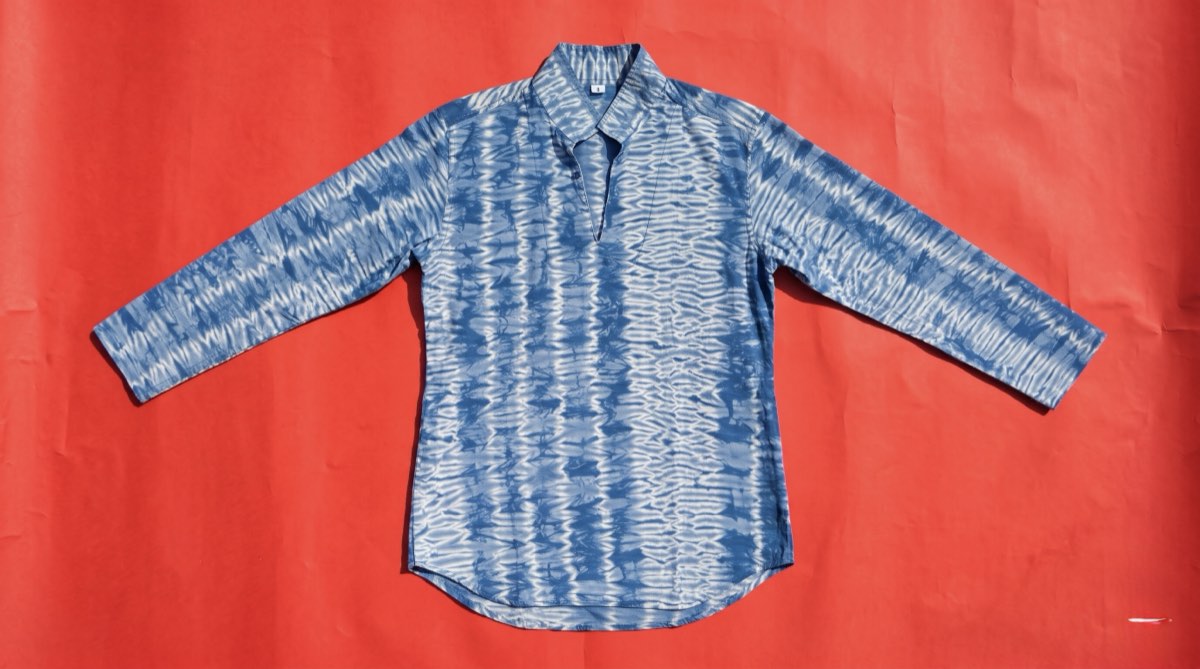
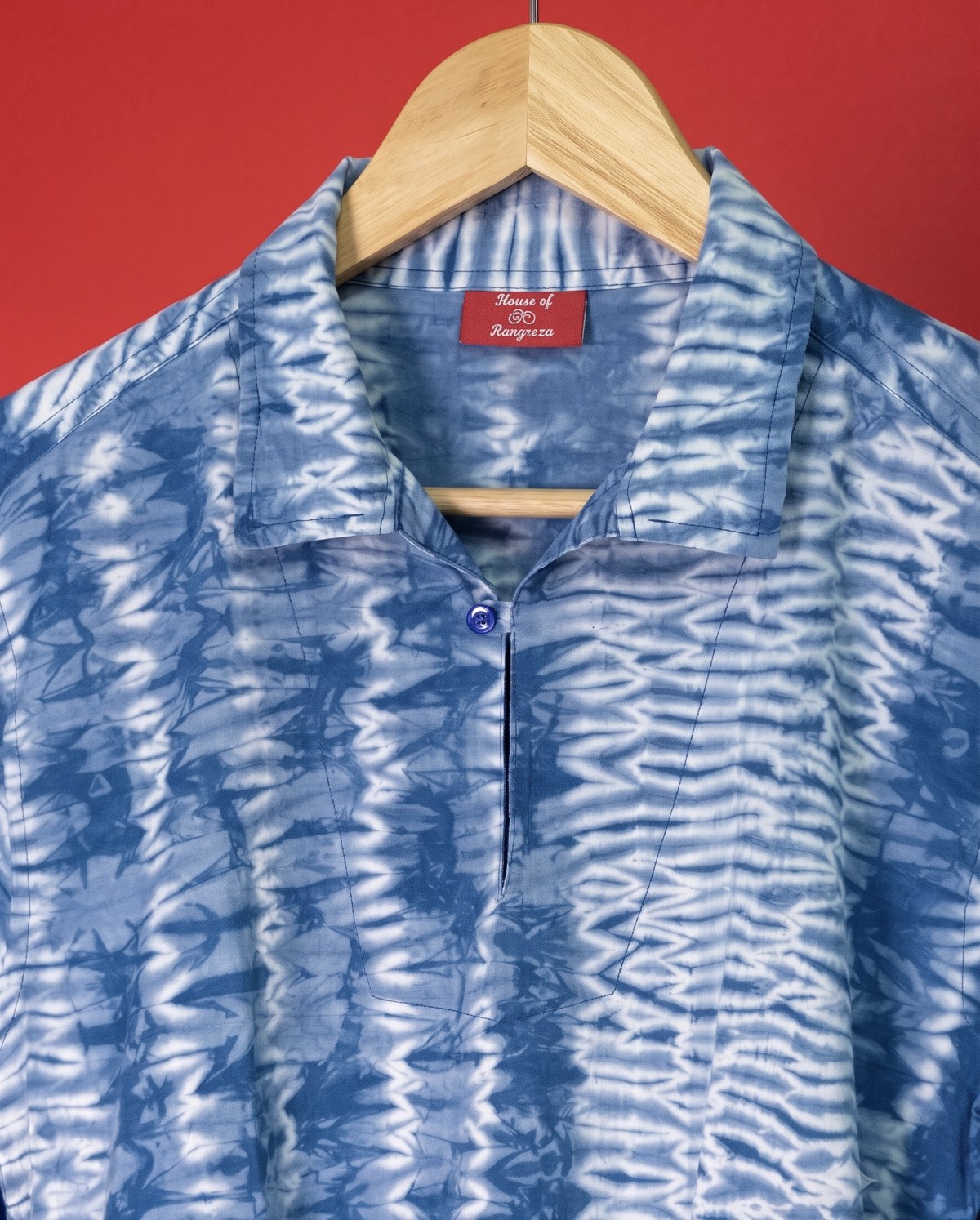
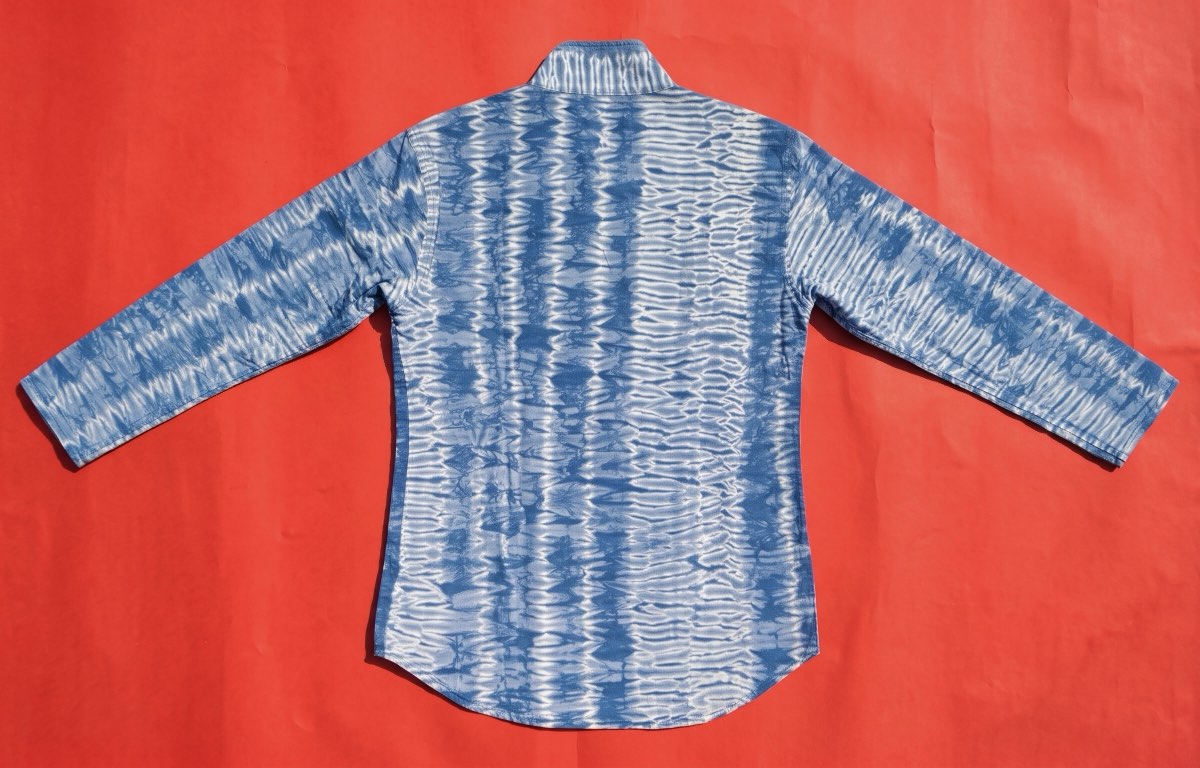
Indigo Shibori Shurta
FabricNatural indigo, shape-resist dyed
FitUnisex, relaxed
ColourNatural indigo
SizesS · M · L · XL
Price₹1,111
Made to order · 10 pieces only · no re-stocks
Made to order · dispatches in 7–10 days
Cold hand-wash separately for the first few washes · Do not wring · Dry in shade · Warm iron on reverse
Drop 5 · Pre-order
Indigo Shibori
No block and no brush. The cloth is bound until the dye cannot get in, and the pattern is whatever the pressure kept out.
The craft · Japanese technique · dyed in Jaipur · Documented since the 8th century
Shibori — The pattern is the pressure
Shibori is Japanese, and we are not going to pretend otherwise. It is shape-resist: no block, no paste, no stencil — the cloth is folded, clamped, stitched or bound so tightly that the dye physically cannot get in, and the pattern is whatever the pressure held back. What makes it ours is the vat. These pieces are dyed in the same natural indigo the Bagru workshop keeps, so a Japanese resist meets a Rajasthani blue.
01
Bind
The cloth is folded and then clamped between shaped boards, bound with thread, or stitched and drawn tight. Wherever it is compressed, dye cannot reach.
02
The vat
The bound bundle goes into fermented indigo and comes out yellow-green. The blue arrives in the air over the following minute, as the dye oxidises.
03
Again
Depth is repetition. Each dip and each oxidation lays more blue over the last — a pale sky and a near-black are the same dye, counted differently.
04
Open
The bindings are cut away and the cloth opened for the first time. Like leheriya, the maker does not see the pattern until it is finished.
“You are not drawing the pattern. You are deciding where the dye is not allowed to go.”
The story
✎ Written
Indigo Shibori — the pattern is the pressure
A Japanese resist and a Rajasthani vat. Nothing is printed — the pattern is wherever the cloth was squeezed too tightly for dye to enter.
Watch the story →