
Drop 3 · Live now
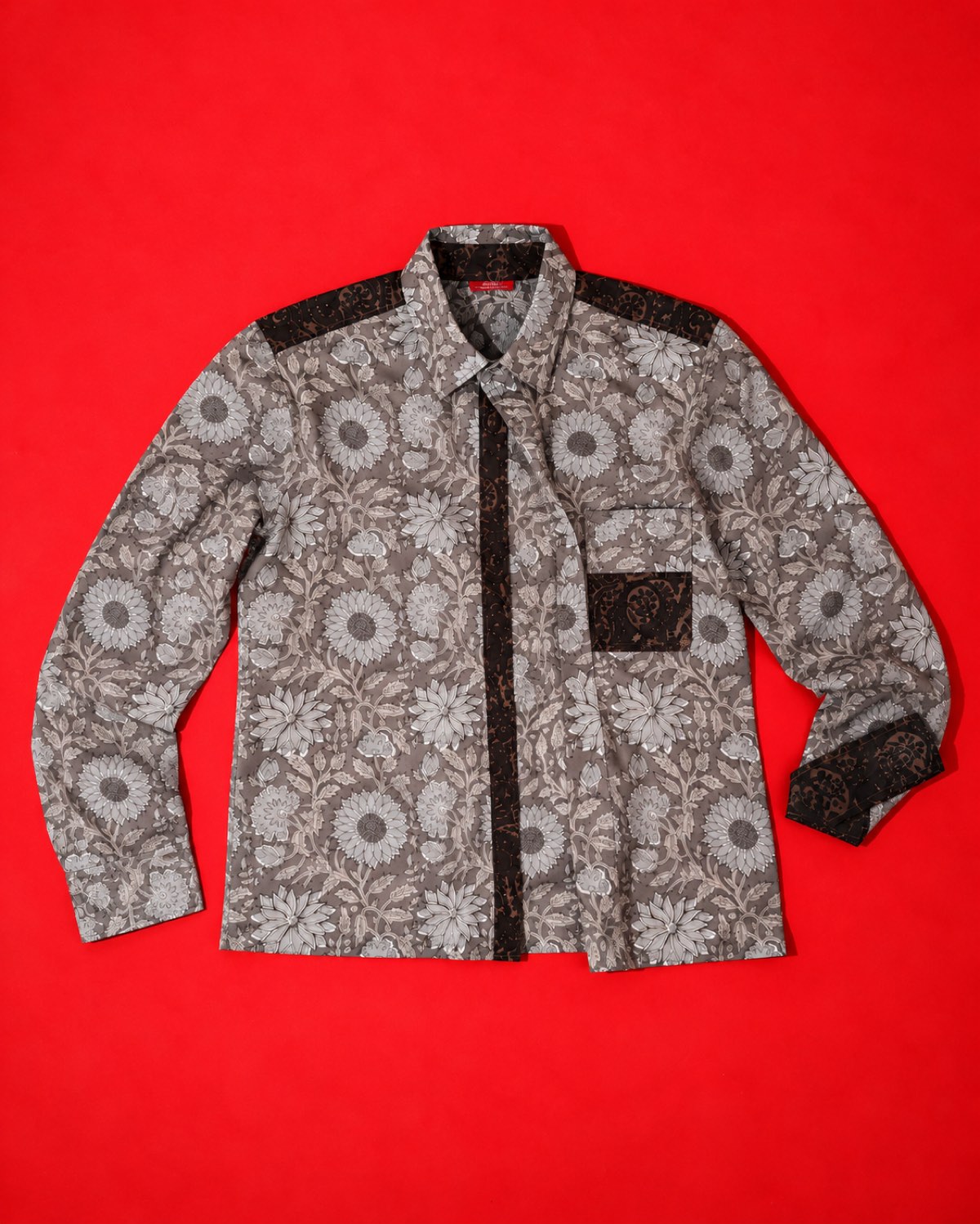
The 80s Shurta — Kashish Dabu Bagru Print
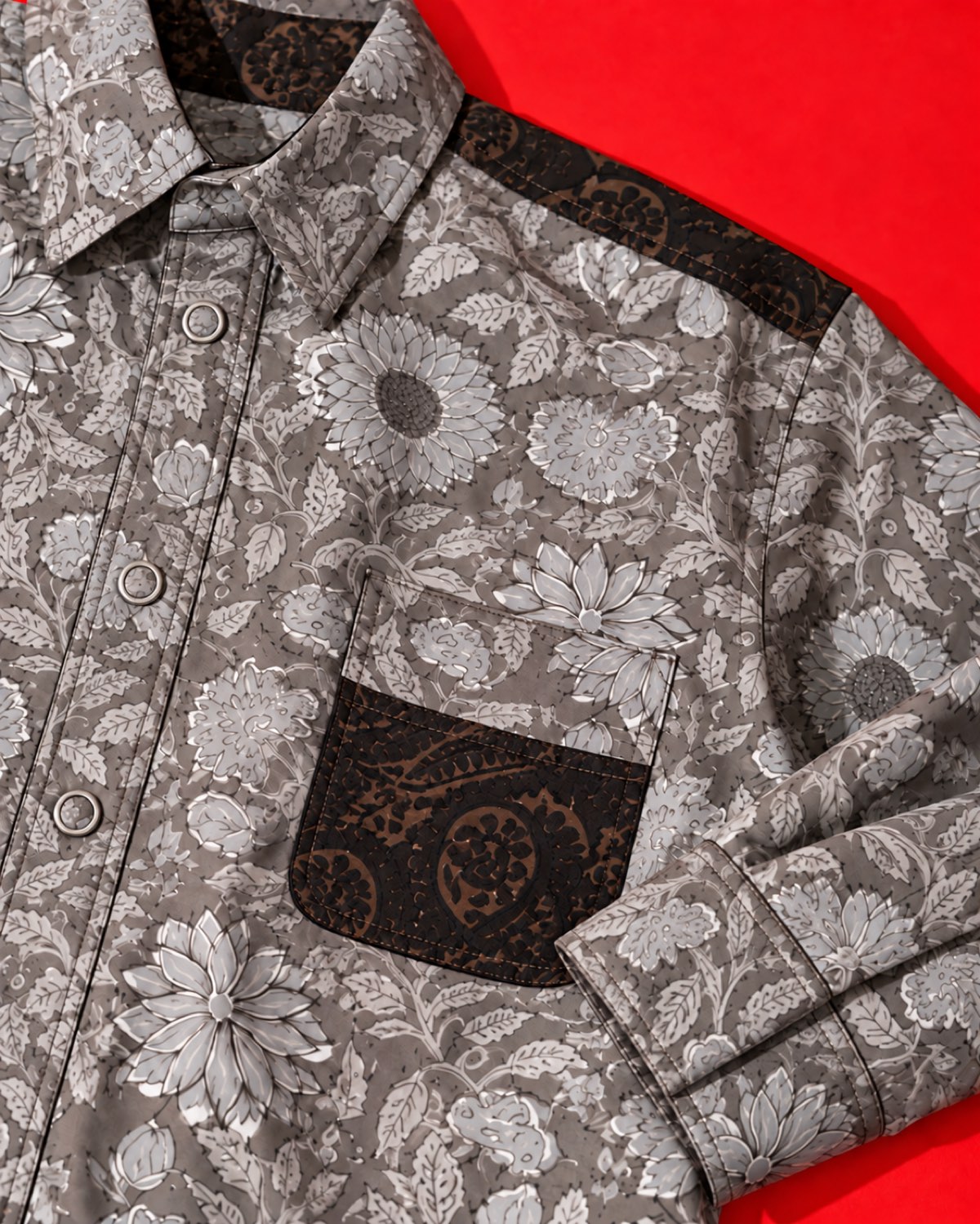
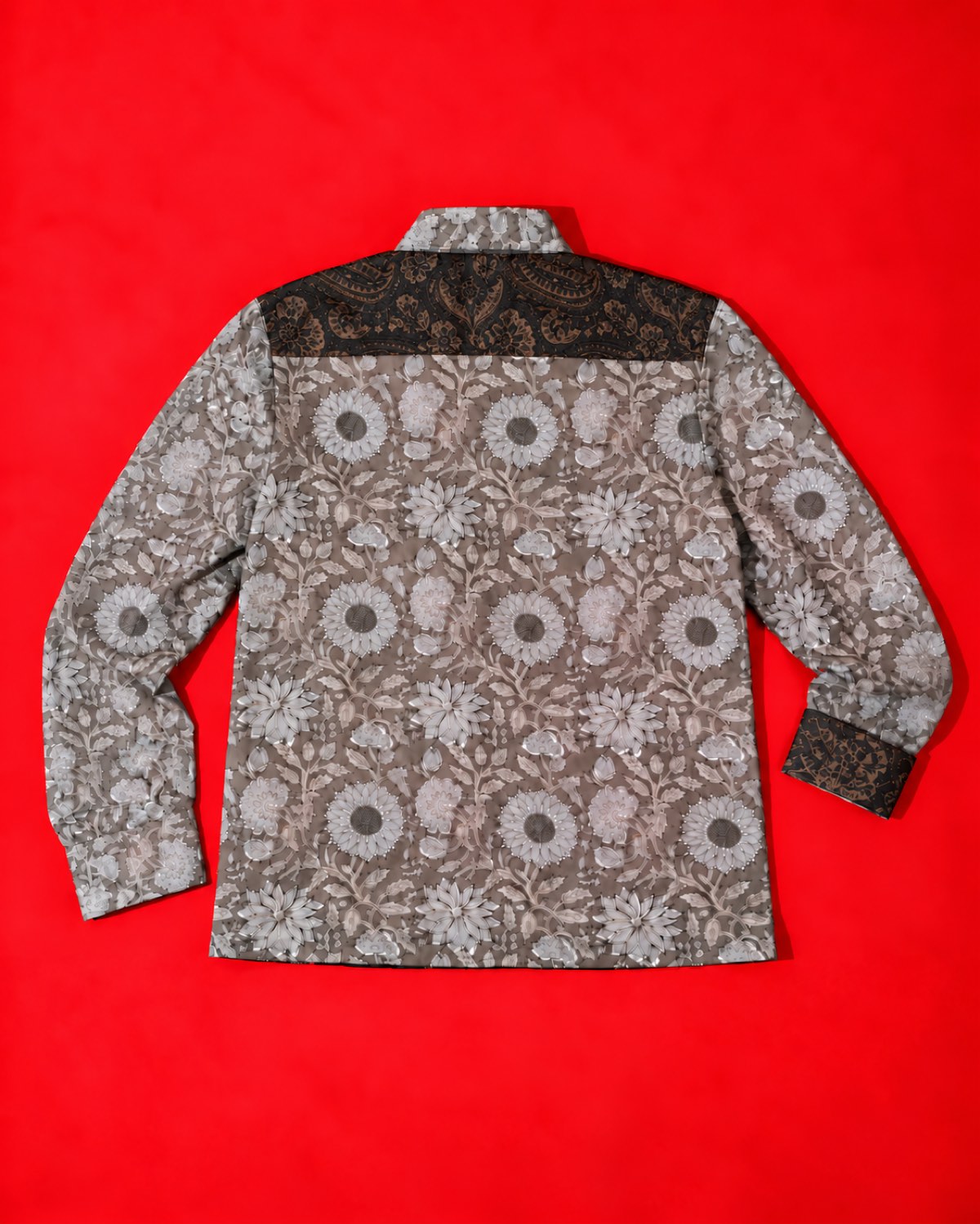
FabricCotton Cambric · dabu mud resist, natural kashish dye
FitUnisex, boxy cropped
ColourKashish grey with syahi-begar panels
SizesS · M · L · XL
Price₹1,111
Limited 20 pieces ever · no re-stocks
Gentle cold hand-wash, separately · Dry in shade · Warm iron on reverse
Drop 3 · Live now
The 80s
Mud goes on before colour does. What you are looking at is the part the dye never reached.

The craft · Bagru, Jaipur · Since the 17th century
Dabu Bagru Print — Mud first, then colour
Bagru is a village thirty kilometres west of Jaipur where the Chhipa families have printed cloth for three hundred years, and it works the opposite way round from most printing: the first thing the block lays down is not colour but mud. A paste of black clay, gum, lime and wheat chaff is pressed onto the cloth and left to dry in the sun. Then the whole piece goes into the dye. Where the mud sat, the dye never reached — so the pattern is the part that stayed clean. The grey that gives this drop its name is kashish, drawn from rusted iron fermented with jaggery, and like every Bagru colour it is grown rather than mixed.
01
Harda
The raw cloth is steeped in myrobalan, which leaves the cream ground every Bagru print sits on and gives the dyes something to bite into.
02
Dabu
Mud resist — clay, gum, lime and wheat chaff — is block-printed on by hand and dusted with sawdust so it holds its edge, then sun-dried hard.
03
Kashish
The piece is dyed in iron fermented with jaggery. The mud holds the colour off; what is left when it falls away is the print.
04
Syahi-begar
The paired black and beige printed from the same two vats — the contrast panels on the yoke, placket and pocket of this Shurta.
05
Wash & sun
The dried resist is beaten and washed out of the cloth, and the piece is laid in the Rajasthan sun to fix.
“You print the mud, not the pattern. The pattern is what the mud kept out.”
Made by Mr. Raj.
The story
✎ Written
The 80s — mud, then colour
In Bagru the block lays down mud before it lays down colour. The print is the part the dye never reached.
Watch the story →